
Aug 19, 2026News & Insights
Will Stainless Steel Jewelry Fade?
“Tarnish-resistant” does not mean “maintenance-free.”
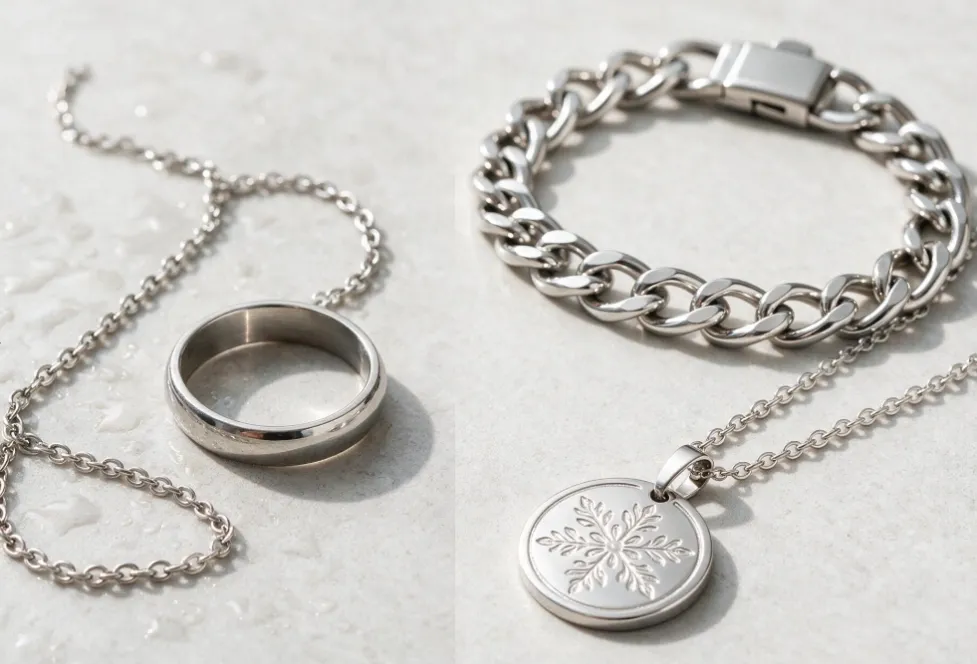
Stainless steel jewelry is widely loved for its modern appearance, affordability, durability, and low-maintenance nature. From minimalist chains and hoop earrings to memorial jewelry, rings, bracelets, and customized pendants, stainless steel is a practical choice for everyday wear.
But one question often comes up before buying or wearing it: Will stainless steel jewelry fade?
In most cases, high-quality stainless steel jewelry does not fade in the same way that plated fashion jewelry does. Its color is part of the material itself rather than a thin surface layer, especially for natural silver-tone stainless steel. However, it can become dull, stained, scratched, or discolored when exposed to certain chemicals, sweat, moisture, cosmetics, or improper cleaning methods.
The good news is that stainless steel jewelry is usually easy to clean and maintain. With a few simple habits, it can retain its shine and attractive finish for years.
What Is Stainless Steel Jewelry?
Stainless steel is an iron-based alloy containing chromium, which creates a protective layer on the surface. This layer helps resist rust, corrosion, and tarnishing. Jewelry is commonly made from grades such as 304 stainless steel or 316L stainless steel.
316L stainless steel is particularly popular in jewelry because it offers stronger corrosion resistance and is generally suitable for sensitive skin. It is often used for memorial jewelry, urn pendants, medical-style accessories, watches, body jewelry, and everyday fashion pieces.
Natural stainless steel has a silver-gray tone that does not normally “fade.” Unlike gold-plated or silver-plated jewelry, the base metal itself provides the visible color.
However, colored stainless steel jewelry requires more attention. Gold, rose gold, black, blue, and rainbow finishes may be created through PVD coating, electroplating, or other surface treatments. High-quality PVD coatings are durable, but they can gradually wear down if the jewelry is constantly exposed to friction, chemicals, or harsh cleaning products.
Common Stains and Wear Issues
Although stainless steel is durable, it is not completely immune to everyday wear. The most common problems include:
- Fingerprints and skin oils that make polished jewelry look dull.
- Soap residue from handwashing, showering, or cleaning.
- Lotion, perfume, sunscreen, makeup, and hair products that leave a film on the surface.
- Sweat and body oils, especially after exercise or during hot weather.
- Water spots caused by minerals in hard water.
- Small scratches caused by contact with keys, coins, metal accessories, or hard surfaces.
- Surface discoloration from chlorine, bleach, strong detergents, or acidic chemicals.
- Fading or uneven wear on plated or PVD-coated stainless steel jewelry.
For example, a stainless steel necklace may still be structurally perfect, but it can lose its bright appearance after repeated exposure to perfume, body lotion, and sweat. This does not necessarily mean the metal is damaged. Often, a gentle cleaning can restore much of its shine.
Tools You Need—and What to Avoid
Cleaning stainless steel jewelry does not require expensive products. In fact, simple and gentle tools work best.
You may need:
- A soft microfiber cloth
- Warm water
- Mild dish soap
- A small bowl
- A soft toothbrush with very soft bristles
- A clean, dry towel
- Cotton swabs for small details, engravings, or chain links
Avoid using harsh cleaning tools or chemicals, especially on gold-tone, black, rose gold, or customized stainless steel jewelry.
Do not use:
- Bleach or chlorine-based cleaners
- Toothpaste
- Baking soda scrubs
- Steel wool or abrasive scouring pads
- Rough paper towels
- Strong jewelry dips
- Acetone or nail-polish remover
- Highly acidic cleaners
Toothpaste is a particularly common mistake. Many people believe it is a quick way to polish jewelry, but toothpaste often contains abrasive particles that can scratch the surface or damage plated finishes. It may create tiny marks that make polished jewelry look duller over time.
How to Clean Stainless Steel Jewelry Step by Step
For regular maintenance, clean your stainless steel jewelry every few weeks—or more often if you wear it daily.
1. Prepare a gentle cleaning solution
Fill a small bowl with warm water and add a few drops of mild dish soap. Avoid hot water, especially if your jewelry includes glue-set stones, resin, leather, fabric, or other mixed materials.
2. Soak the jewelry briefly
Place the stainless steel piece in the water for about five to ten minutes. This helps loosen oil, soap residue, and light dirt.
If the item is a memorial pendant with a screw-top compartment, make sure it is tightly closed before soaking. If you are unsure about its waterproof structure, clean only the outer surface with a damp cloth instead.
3. Gently clean the surface
Use a soft microfiber cloth to wipe the jewelry. For textured areas, engravings, chain links, or detailed settings, use a very soft toothbrush or cotton swab.
Brush lightly and do not apply excessive pressure. The purpose is to remove residue, not to scrub the metal aggressively.
4. Rinse with clean water
Rinse the jewelry under clean, lukewarm water to remove soap residue. Soap left on the surface can create streaks or dullness.
Again, use caution with jewelry containing glued components, crystals, wood, leather, or other materials that should not be soaked.
5. Dry completely
Pat the jewelry dry with a soft towel, then allow it to air-dry fully before storing it. Moisture trapped in chain links, clasps, engraved areas, or pendant compartments can cause residue buildup over time.
Finish by gently buffing the piece with a dry microfiber cloth to restore its shine.
Daily Care and Storage Tips
Good daily habits matter more than occasional deep cleaning. Stainless steel jewelry lasts longer when it is protected from unnecessary chemical exposure and friction.
Here are several practical rules:
- Put jewelry on last, after applying perfume, lotion, sunscreen, makeup, and hair products.
- Remove jewelry before swimming in chlorinated pools or hot tubs.
- Take it off before using bleach, household cleaners, or strong detergents.
- Remove rings and bracelets when doing heavy work, gardening, gym training, or moving metal objects.
- Wipe jewelry with a soft cloth after exercise or a long day of wear.
- Store each piece separately to reduce scratching and tangling.
- Keep jewelry in a dry pouch, lined jewelry box, or sealed bag away from direct sunlight and humidity.
- Avoid storing stainless steel jewelry together with silver, brass, or low-quality plated accessories that may transfer residue.
For B2B retailers and jewelry brands, including a simple care card with each product can reduce customer complaints and improve the perceived value of the item. This is especially useful for customized memorial jewelry, engraved pendants, and colored PVD stainless steel collections.
Common Misconceptions
One misconception is that stainless steel jewelry never changes at all. In reality, stainless steel is highly resistant to tarnish and corrosion, but it can still collect oil, residue, scratches, and stains. “Tarnish-resistant” does not mean “maintenance-free.”
Another misconception is that all stainless steel jewelry has the same quality. The grade of steel, polishing quality, coating method, plating thickness, production process, and daily usage conditions all affect long-term performance.
A third mistake is assuming that discoloration always means fading. Sometimes the jewelry simply has a layer of lotion, soap, sweat, or hard-water minerals on it. Cleaning it properly may bring back its original appearance.
Finally, gold-tone or rose-gold stainless steel should not be treated exactly like natural silver-tone stainless steel. A coated finish needs gentler care because aggressive polishing or harsh chemicals can wear away the color layer.
Final Thoughts
High-quality stainless steel jewelry is one of the most dependable choices for everyday wear. It does not usually fade like ordinary plated jewelry, and with proper care, it can remain polished, clean, and attractive for a long time.
The key is simple: clean it gently, avoid harsh chemicals, dry it thoroughly, and store it properly. Whether you wear a stainless steel chain, engraved memorial pendant, fashion ring, or customized bracelet, small care habits can make a major difference.
If you are choosing stainless steel jewelry for your collection, retail business, or custom jewelry project, invest in well-made pieces and follow the right care routine. Start by checking your current jewelry today—give it a gentle clean, store it correctly, and help it keep its shine for years to come.