
Sep 29, 2026News & Insights
What Makes Waterproof Jewelry a Better Choice for Everyday Wear?
See how durability and lifestyle compatibility influence purchasing decisions
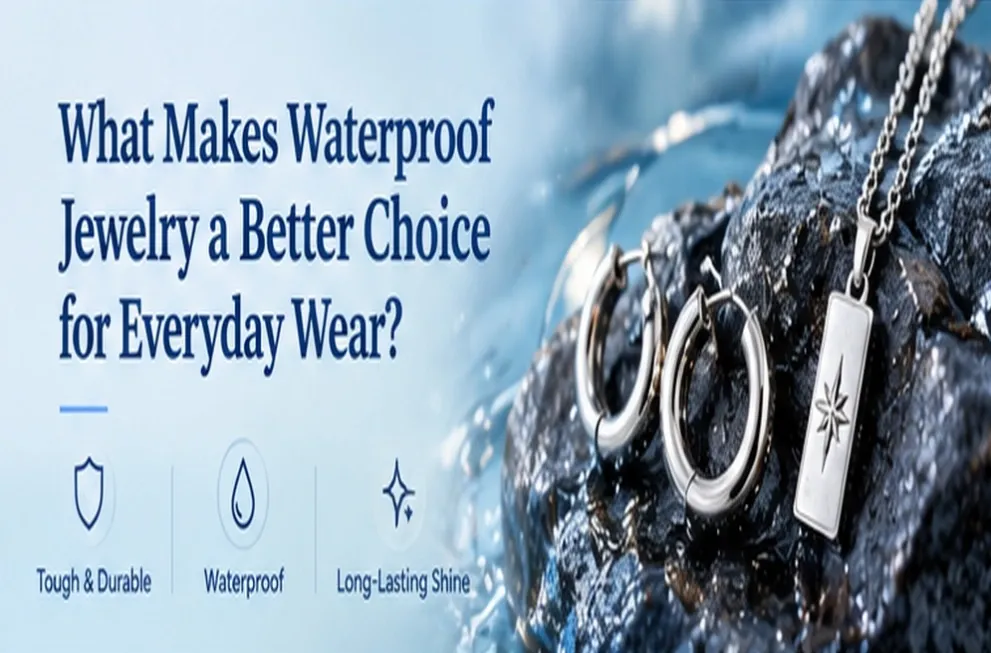
Everyday consumers increasingly prefer products that require fewer compromises. Jewelry is no exception. If customers need to remove an accessory every time they wash their hands, exercise, travel, or encounter rain, the product becomes less convenient.
Water-resistant and waterproof-positioned jewelry can solve part of this problem, but only when the performance claim is supported by the actual product. For wholesalers and brands, the opportunity is to build collections around convenience while maintaining accurate specifications.
Why Does Everyday Convenience Matter?
Convenience directly affects how often a customer wears a product. The more naturally an accessory fits daily routines, the stronger its potential to become a staple rather than a one-time fashion purchase.
This can support repeat sales, gifting, and collection expansion. A customer who trusts one everyday bracelet may be more willing to purchase another color or matching necklace.
How Does Material Support the Concept?
Stainless steel is often selected for everyday jewelry because of its strength and corrosion resistance. Its appearance can support both minimalist and statement designs.
For colored styles, surface treatment becomes critical. PVD and other finishes should be assessed for color consistency and wear performance. Buyers should remember that a waterproof positioning covers the finished product, not merely the steel base. If the design includes stones, adhesives, electronics, leather, or other materials, each component can influence performance.
What Should a Collection Look Like?
An effective everyday collection can combine core products with trend-driven variations. Core products might include simple chains, classic rings, basic bracelets, and versatile pendants. Trend styles can introduce shapes, textures, colors, or seasonal motifs.
A collection can also use a clear hierarchy: entry products for first-time buyers, mid-range styles for regular customers, and premium or personalized products for higher-value purchases.