Oct 28, 2026News & Insights
Urns vs. Urn Jewelry: Which Is Right for You?
A Guide to Choosing the Best Memorial Option
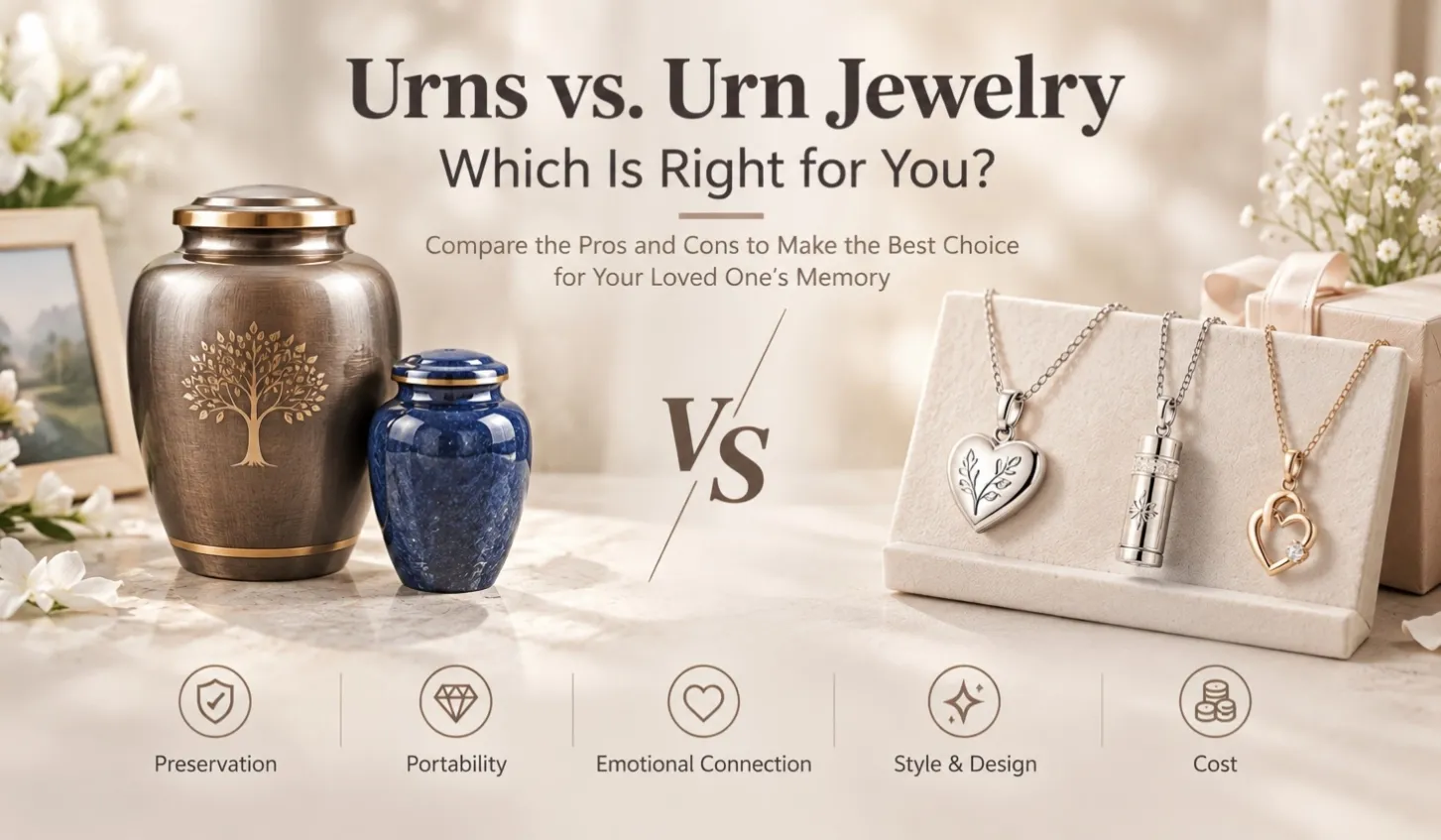
Losing someone you love is never easy. Finding a meaningful way to honor their memory can bring comfort during grief and help keep their presence close to your heart. For families choosing how to remember a loved one after cremation, two common options are traditional cremation urns and cremation urn jewelry.
Both offer a way to preserve a connection with someone who has passed away, but they serve different purposes. A traditional urn provides a dedicated place to keep cremated remains, while urn jewelry allows you to carry a small keepsake with you in everyday life.
So, which option is right for you? Understanding the differences in preservation, convenience, design, emotional significance, and cost can help you make a decision that reflects your personal wishes and circumstances.
1. Traditional Cremation Urns: A Dedicated Place of Remembrance
Traditional cremation urns are designed to hold and preserve cremated remains in a dedicated container. They are available in various materials, including ceramic, metal, wood, glass, and biodegradable materials, offering different styles for different preferences.
Advantages of Traditional Urns
More storage capacity: A full-size urn can hold all of a person's cremated remains, making it a practical choice for families who wish to keep them together.
A permanent memorial space: An urn can be displayed at home, placed in a columbarium, or used according to cemetery and family arrangements. It provides a physical place for reflection, remembrance, and family rituals.
Wide design variety: From classic and understated containers to personalized urns featuring engraved names, meaningful symbols, or photographs, there are many ways to create a tribute that reflects a loved one's personality.
Disadvantages of Traditional Urns
Traditional urns are generally less portable than jewelry. Their size and weight can make them difficult to carry when traveling or moving between locations. They also require a suitable place for storage or display.
For people who find comfort in having a loved one close throughout the day, a traditional urn may provide a meaningful memorial at home but may not meet every emotional or practical need.
2. Cremation Urn Jewelry: A Personal Memorial You Can Carry
Cremation urn jewelry, also called cremation jewelry or memorial jewelry, is designed to hold a small symbolic portion of cremated remains. Some pieces can also hold a lock of hair or another tiny keepsake, depending on their design.
Common styles include heart pendants, cylinder necklaces, teardrop pendants, crosses, and other symbolic shapes. Materials may include stainless steel, sterling silver, gold, or other jewelry materials.
Advantages of Cremation Jewelry
Keep memories close: A cremation necklace can be wear, offering a personal reminder of someone you love. For many people, this simple daily connection brings comfort during difficult moments.
Portable and discreet: Unlike a traditional urn, memorial jewelry can accompany you to work, on trips, or during meaningful occasions. Its familiar appearance allows you to remember someone privately without needing to explain its significance to others.
Personal expression: Different shapes, finishes, engravings, and symbolic details allow you to select a piece that reflects a relationship or shared memory. A heart may represent enduring love, while a simple pendant may suit someone who prefers understated jewelry.
Disadvantages of Cremation Jewelry
Cremation jewelry holds only a small portion of cremated remains, so it is not a replacement for a full-size urn when the goal is to preserve all the remains in one place.
It also requires careful handling. The filling opening, screw closure, and seals should be checked for secure construction. Some designs may need professional assistance for filling, and the jewelry should be maintained according to the manufacturer's instructions.
Because these pieces are worn, they may also be exposed to moisture, impact, cosmetics, or everyday wear. Choosing a durable material and following appropriate care instructions can help protect both the jewelry and its sentimental contents.
3. Urns vs. Urn Jewelry: Key Differences
The most important difference is how each option fits into daily life and remembrance.
Factor | Traditional Cremation Urn | Cremation Urn Jewelry |
Capacity | Usually holds the full cremated remains or a substantial portion, depending on size | Holds a small symbolic portion |
Portability | Generally designed for stationary placement | Designed to be carried or worn |
Memorial experience | Creates a dedicated place for remembrance | Offers a personal, everyday connection |
Design | Decorative containers in various sizes and materials | Wearable designs, including necklaces and pendants |
Maintenance | Depends on material and display environment | Requires jewelry care and secure closure checks |
Cost | Varies with size, material, craftsmanship, and personalization | Varies with metal, design, finish, and craftsmanship |
Neither option is inherently better. The right choice depends on what you want the memorial to provide and how you prefer to remember your loved one.
4. How to Choose the Right Memorial Option
Before making a decision, consider these practical and emotional questions.
Do you want to keep all the remains together?
If preserving all the cremated remains in one dedicated place is your priority, a traditional urn may be the most appropriate choice. If you would like to carry a small portion with you, cremation jewelry may be worth considering.
Would you prefer a memorial at home or something you can wear?
An urn creates a place for quiet reflection, while a necklace or pendant can become part of your everyday routine. Some families choose both options to meet different needs.
What style feels most meaningful to you?
Consider whether you prefer a classic urn, a personalized keepsake, or a simple pendant that matches your usual clothing and lifestyle. A memorial does not need to be elaborate to be meaningful.
What is your budget?
Compare the complete cost, including personalization, accessories, filling services, and maintenance requirements where applicable. The most expensive option is not necessarily the most meaningful.
How important are durability and security?
For urn jewelry, review the material specifications, closure design, craftsmanship, and care instructions. For traditional urns, consider material durability, placement, and the environment in which the urn will be kept.