
Oct 14, 2026Industry Insight
Stainless Steel vs. Sterling Silver: Which Is Better for Your Jewelry Line?
Ideal jewelry applications for brands
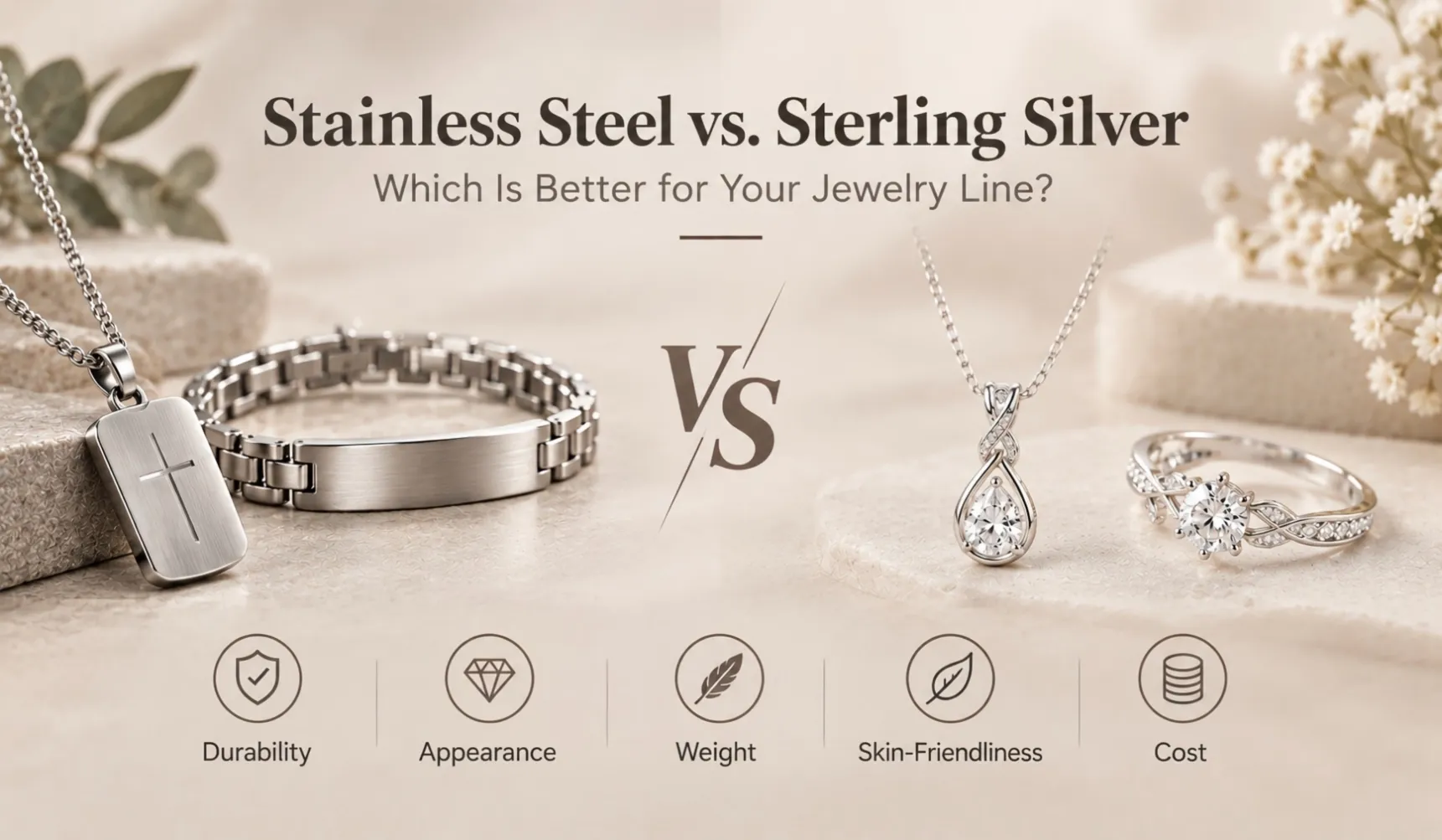
Choosing the right metal is one of the most important decisions when developing a jewelry collection. Stainless steel and sterling silver are two popular materials, each offering distinct advantages in durability, appearance, cost, and manufacturing flexibility. But which one is better for your jewelry line?
The answer depends on your target customers, product positioning, budget, and intended use. For jewelry brands, wholesalers, and e-commerce sellers, understanding the differences between these metals can help reduce sourcing risks and improve product profitability.
From a manufacturer's perspective, material selection also affects production processes, finishing requirements, quality control, and long-term product performance. In this guide, we compare stainless steel vs. sterling silver across the key factors that matter when developing a competitive jewelry collection.
1. Corrosion Resistance: Which Metal Lasts Longer?
Stainless steel is widely recognized for its corrosion resistance. Its chromium content helps form a protective oxide layer on the surface, reducing the risk of rust and corrosion under normal conditions. Certain grades, such as 316L stainless steel, are commonly used in jewelry because of their durability and resistance to everyday wear.
Sterling silver, typically consisting of 92.5% silver and 7.5% other metals, is also suitable for fine jewelry but behaves differently. It can tarnish when exposed to sulfur-containing compounds, moisture, cosmetics, and certain environmental conditions. Regular cleaning and proper storage help maintain its appearance.
For everyday fashion jewelry, bracelets, necklaces, and products designed for frequent use, stainless steel is often the practical choice. Sterling silver may be more suitable for customers who value precious-metal jewelry and are comfortable with routine maintenance.
It is important to remember that neither material is completely maintenance-free. Performance depends on the alloy, finishing, environment, and care practices.
2. Hardness and Durability: Which Is More Resistant to Scratches?
Stainless steel is generally harder and more resistant to deformation than sterling silver. This makes it a strong option for jewelry exposed to frequent handling, including men's bracelets, chain necklaces, rings, and everyday accessories.
Sterling silver is relatively soft and can develop scratches, dents, or shape changes under pressure. However, its workability is an advantage for jewelers because it can be shaped, engraved, and repaired using established techniques.
From a manufacturing standpoint, stainless steel can be particularly attractive for products that require consistent structure and durability. Nevertheless, its hardness can make certain cutting, engraving, and forming operations more demanding.
Sterling silver is often easier to work with for traditional jewelry craftsmanship, although intricate designs still require specialized skills.
When selecting a material, consider not only scratch resistance but also the product's structure, thickness, clasp design, and intended wearing conditions.
3. Weight and Wearing Comfort
Weight affects both customer experience and product design. Stainless steel has a relatively high density, while sterling silver is denser still. In practice, the finished weight of a piece depends heavily on its dimensions, construction, and whether it is solid, hollow, or made from lightweight components.
For similarly sized solid pieces, sterling silver is generally heavier than common stainless steel grades. This difference can influence comfort, shipping costs, and how substantial a product feels to the customer.
For lightweight earrings, delicate necklaces, and large statement designs, manufacturers can adjust thickness and structure to achieve the desired balance between comfort and durability.
If your target market prefers minimalist, lightweight accessories, evaluate the finished product rather than choosing a material based on its name alone. Samples are especially useful for checking weight, balance, and wearing comfort before placing a bulk order.
4. Hypoallergenic Properties: Which Is Better for Sensitive Skin?
Both stainless steel and sterling silver can be suitable for many jewelry customers, but neither material is automatically hypoallergenic in every formulation.
The skin compatibility of stainless steel depends on its grade, composition, and the individual's sensitivity. Some grades contain nickel, and nickel release can be a concern for people with nickel allergies.
Sterling silver is composed mainly of silver, but its remaining alloy content can vary. Traditional sterling silver often contains copper, although other alloying elements may be used. Nickel-free sterling silver can be an option for customers concerned about nickel exposure.
For jewelry intended for sensitive skin, buyers should request accurate material specifications and relevant compliance or nickel-release test reports where applicable. Suppliers should also clarify the composition of plating, coatings, and other components that contact the skin.
Transparent material claims help brands build customer trust and reduce the risk of misleading product descriptions.
5. Appearance and Manufacturing Compatibility
Stainless steel offers a clean, modern metallic appearance that works well with minimalist jewelry, industrial-inspired designs, men's accessories, and contemporary fashion collections. It can be polished, brushed, engraved, or finished with suitable coatings, including certain gold-tone and black finishes.
Sterling silver provides a traditional precious-metal appeal. Its bright white luster makes it popular for fine jewelry, personalized gifts, birthstone designs, and pieces intended to carry emotional or sentimental value.
Both materials support a wide range of designs, but their manufacturing requirements differ. Stainless steel can require specialized equipment and processing methods, while sterling silver is well established in casting, soldering, engraving, and detailed bench jewelry work.
For customized collections, discuss design feasibility with your manufacturer before finalizing the product. Factors such as intricate details, surface treatments, engraving depth, and component compatibility can influence production costs and finishing quality.
6. Cost and Price Positioning
One of the biggest differences between these materials is their cost structure.
Stainless steel is generally more economical as a raw material and is often suitable for producing jewelry at accessible price points. Its durability and relatively low maintenance requirements can also support value-oriented product positioning.
Sterling silver contains a high proportion of precious metal, so its material cost is more closely linked to silver market prices. Finished product costs also depend on weight, craftsmanship, design complexity, and production volume.
For brands selling through online marketplaces, fashion retailers, or wholesale channels, stainless steel can provide flexibility when targeting customers who prioritize affordability and everyday durability.
Sterling silver is often a better fit for premium collections, gift-oriented products, and customers willing to pay more for precious-metal content.
7. Which Jewelry Products and Customers Suit Each Material?
Stainless steel is often a strong choice for:
- Everyday fashion necklaces, bracelets, and rings.
- Men's jewelry and contemporary minimalist accessories.
- Affordable gift collections and high-volume e-commerce products.
- Durable designs intended for frequent wear.
- Brands seeking consistent production and competitive price points.
Sterling silver is often better suited to:
- Fine jewelry and premium accessory collections.
- Personalized pendants, engraved gifts, and sentimental jewelry.
- Birthstone designs and traditional jewelry styles.
- Customers who value precious-metal content and craftsmanship.
- Brands targeting higher price segments.
These are general guidelines rather than strict rules. Both materials can serve multiple market segments when the design, finish, and brand positioning are appropriate. Are you planning your next jewelry collection? Welcome to contact us.