Oct 7, 2026News & Insights
How to Choose the Right Memory Jewelry for Your Loved One
Choose meaningful jewelry based on style, material, personalization, and purpose.
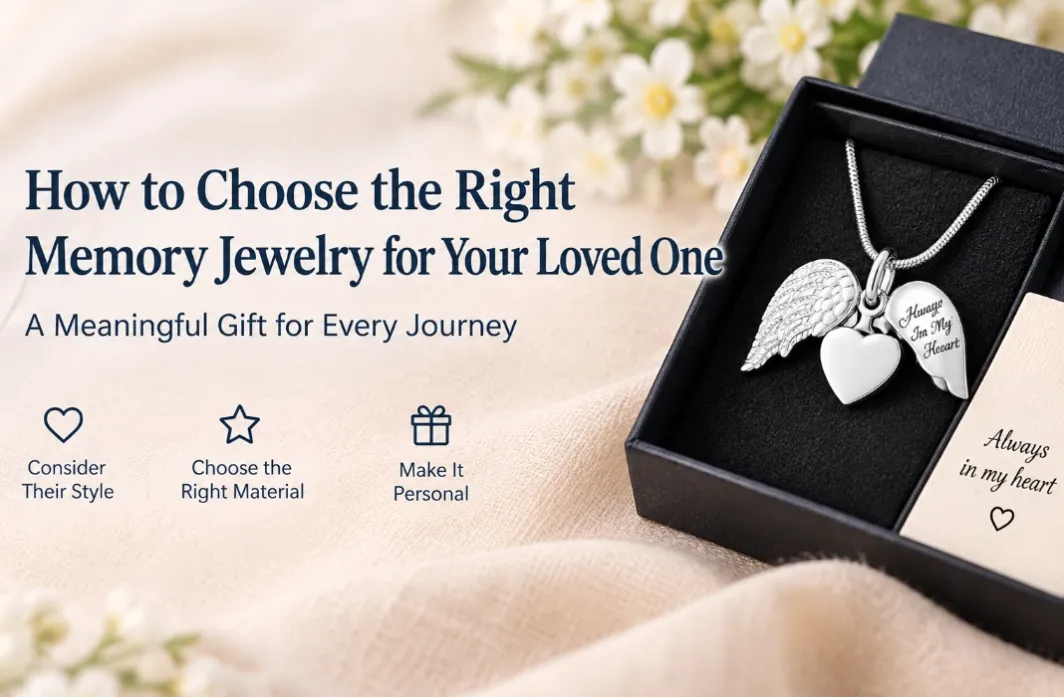
Choosing memory jewelry is different from choosing ordinary fashion jewelry.
The customer is usually not asking, “Which design looks best?”
They are asking, “Which piece feels most meaningful?”
For retailers and brands, understanding this decision process is essential. When customers are given the right information, they can make a confident choice based on the person or pet they want to remember.
What Type of Memory Jewelry Is Right?
Start with the story.
Ask what the jewelry is intended to represent.
For a spouse or partner, a heart may communicate love and connection.
For a parent or family member, a tree of life or engraved pendant may feel appropriate.
For a religious customer, a cross may have deeper meaning.
For a pet owner, a paw-print design may be the natural choice.
There is no universal answer.
The design should match the emotional relationship.
Why Does Material Matter?
After selecting a symbolic design, the next consideration is material.
Stainless Steel keepsake jewelry is attractive because it combines a modern appearance with practical durability. It can also support different finishes and customization techniques.
For everyday jewelry, buyers may prefer a material that does not require the level of care associated with some more delicate jewelry materials.
For B2B brands, stainless steel also provides a flexible foundation for developing multiple collections.
How Important Is Personalization?
Personalization is one of the strongest ways to differentiate memorial jewelry.
A standard heart pendant becomes much more personal when it carries a name.
A round pendant can become unique with a meaningful date.
A minimalist bar can become a private memorial with handwriting or initials.
Depending on supplier capabilities, customization may include:
- Laser engraving
- Names
- Dates
- Messages
- Symbols
- Fingerprints
- Handwriting
- Custom artwork
The exact options should always be confirmed with the manufacturer.
What About Self-Fill In Jewelry?
Customers who want to participate personally in preserving a memory may consider self-fill in jewelry.
These products are designed with a small chamber that allows the customer to add a small amount of cremation ashes or another suitable keepsake.
The experience can be meaningful because the customer is directly involved in preparing the piece.
For retailers, self-fill designs also provide an opportunity to educate customers through product instructions and content marketing.
How Should Customers Choose the Shape?
A useful approach is to divide designs into three groups.
Symbolic
Hearts, crosses, trees, paw prints, and similar designs communicate a clear meaning.
Discreet
Cylinders, bars, and minimalist pendants can look like everyday jewelry.
Personalized
Products with larger engraving surfaces allow customers to create a more individual keepsake.
A well-developed collection should offer all three.
Who Is the Jewelry For?
This question can change the purchase completely.
If the customer is buying for themselves, they may prioritize comfort and personal symbolism.
If they are buying a gift, packaging and presentation become more important.
If the piece is for a pet memorial, animal-related symbolism may be the priority.
For wholesale buyers, this means product collections should be segmented by customer need rather than simply by shape.
How Much Should a Memorial Jewelry Product Cost?
Price should reflect the overall product value rather than material alone.
A basic stainless steel pendant can provide an accessible entry point.
More customized products can command a higher price because they include additional design, engraving, packaging, or production work.
For B2B buyers, a tiered collection can work well:
Entry level: standard designs.
Mid range: upgraded finishes and packaging.
Premium: extensive customization and personalized presentation.
This gives retailers flexibility without forcing every customer into the same price category.
What Should Retailers Look For in a Supplier?
A supplier should be evaluated based on more than factory pricing.
Important factors include:
- Consistent quality
- Product development ability
- Customization
- Communication
- MOQ flexibility
- Production capacity
- Packaging
- Delivery performance
- Export experience
A reliable supplier can help a retailer turn a concept into a scalable collection.
The right memory jewelry should answer three questions:
Does the design represent the memory?
Is the product practical for the intended use?
Can it be personalized enough to feel unique?
If the answer to all three is yes, the customer is much more likely to feel emotionally connected to the purchase.
That is the true strength of Stainless Steel memory jewelry. It is not simply a product chosen from a catalog. It is a personal symbol that helps transform memory into something tangible, wearable, and lasting.