
Sep 24, 2026Industry Insight
How to Choose Smart Jewelry for Modern Consumers and Retail Brands
Explore smart features, customer expectations, and sourcing considerations for connected accessories.
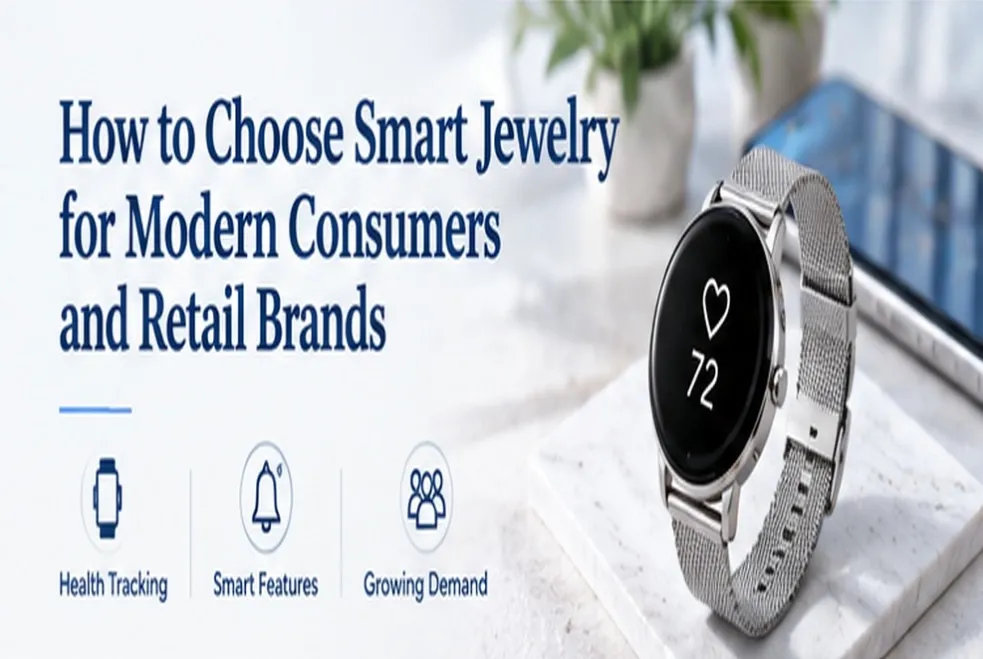
Smart jewelry sits at the intersection of fashion, technology, and lifestyle. For brands and importers, that creates an exciting opportunity—but also a more complicated purchasing process. A beautiful bracelet or pendant is no longer enough. The product may also need reliable electronics, stable connectivity, acceptable battery life, intuitive software, and dependable after-sales support.
The best smart-jewelry sourcing strategy starts with customer value. Technology should solve a real problem or create a meaningful benefit rather than simply adding features to a fashionable accessory.
Why Are Consumers Interested in Smart Jewelry?
Consumers increasingly expect personal technology to fit naturally into daily life. Traditional wearables can feel sporty or obviously electronic, while smart jewelry can integrate useful functions into a fashion-oriented form.
Potential use cases include notifications, activity-related functions, personal safety features, digital interaction, identification, or other connected experiences depending on the product. For retailers, the opportunity is strongest when the function is easy to understand.
What Should Buyers Evaluate?
A smart jewelry product should be evaluated in at least five areas: physical jewelry quality, electronic reliability, software experience, battery performance, and customer support.
The physical product still needs good finishing, comfortable dimensions, secure closures, and attractive design. Electronics should be tested for stability and durability. Software should have clear setup instructions and reasonable compatibility. Battery expectations should be communicated honestly.
How Important Is Water Resistance?
Water resistance can be especially important because jewelry is often worn continuously. However, adding electronics changes the risk profile. A stainless steel exterior does not automatically mean the internal electronics are protected from water.
Ask for the actual water-resistance specification and the test basis. Do not use a general material statement as a substitute for an electronic protection rating.
How Can Brands Control Commercial Risk?
Smart products usually require more coordination than standard fashion jewelry. Start with a pilot order, define acceptance criteria, and collect feedback before scaling inventory.
Confirm MOQ, lead time, packaging, charging accessories, app availability, language support, warranty, replacement policy, and technical-support responsibilities. If the product is private label, confirm what parts of the user experience can be branded.
Smart jewelry can help fashion brands create differentiated collections, but successful sourcing requires a broader evaluation than traditional jewelry. Design, material, technology, software, testing, and after-sales support must work together. The strongest products are not those with the most features, but those that deliver a clear customer benefit in a reliable, attractive, easy-to-use format.