Sep 15, 2026News & Insights
How to Choose a Reliable Stainless Steel Memory Jewelry Supplier
Find the supplier qualities that support consistent quality and growth
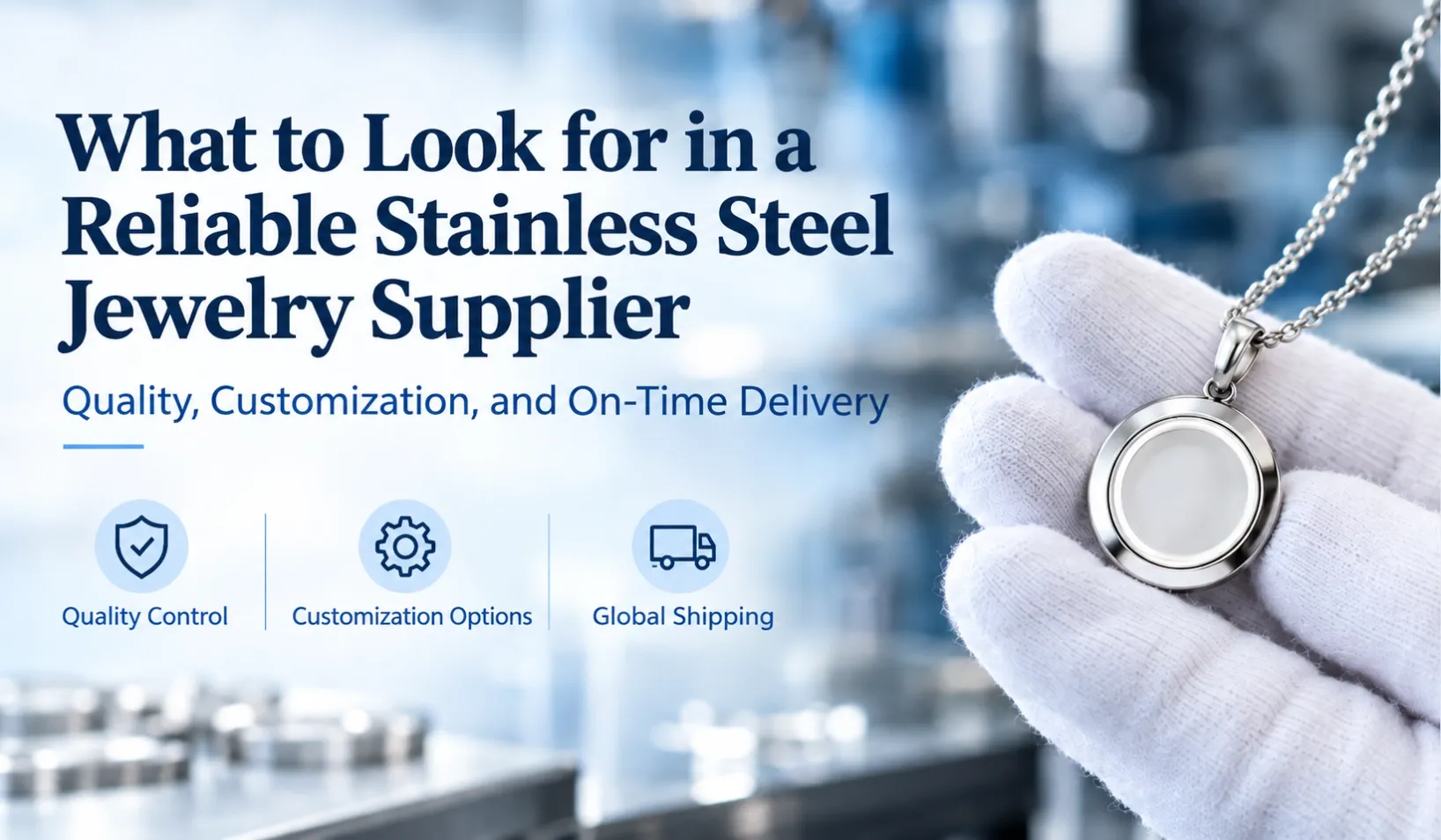
For a jewelry importer, finding a supplier is easy. Finding the right supplier is much harder.
This is particularly true for memorial products. When a customer purchases Stainless Steel memory jewelry, the product represents an emotional story. A quality problem is therefore more than a normal product complaint—it can directly affect customer trust.
For wholesalers, brands, and distributors, supplier selection should be treated as a strategic decision rather than a simple price comparison.
What Makes a Good Supplier?
A reliable supplier should combine five capabilities:
Quality + Product Development + Customization + Communication + Delivery
If one of these areas is consistently weak, scaling the product line becomes difficult.
A low unit price is not valuable if production delays, inconsistent finishing, or high defect rates create additional costs.
Why Is Product Quality the First Priority?
Memorial jewelry must meet customer expectations for appearance and functionality.
Buyers should evaluate:
- Material consistency
- Surface finish
- Polishing
- Plating, where applicable
- Engraving quality
- Chamber construction
- Closure performance
- Chain and clasp components
- Packaging
The best time to identify quality problems is before mass production.
That is why samples and pre-production approval are important parts of supplier management.
How Important Is Customization?
Extremely important.
The memorial jewelry category is naturally suited to personalization.
A supplier with strong OEM/ODM capabilities can help brands develop:
- Custom shapes
- Custom logos
- Engraving
- Packaging
- Finishes
- Color options
- Custom molds
- Private-label collections
This can help a retailer move from selling generic products to building a recognizable product range.
What About Self-Fill In Jewelry?
If the business plans to sell self-fill in jewelry, supplier evaluation should include the internal structure.
Ask about:
- Filling-port design
- Chamber dimensions
- Closure mechanism
- Accessories
- Assembly
- Quality inspection
These details directly influence the user experience.
A supplier should be able to explain how the product is assembled and what instructions are supplied.
How Should Buyers Compare Suppliers?
Avoid comparing suppliers only by unit price.
Instead, create a scorecard.
Product
Is the design attractive and commercially relevant?
Quality
Are production batches consistent?
Customization
Can the supplier support future product development?
MOQ
Can the supplier support both testing and larger orders?
Lead Time
Can production meet the brand’s sales calendar?
Communication
Are questions answered clearly and quickly?
Export
Does the supplier understand international packaging and shipping requirements?
This approach creates a much more realistic picture of supplier value.
What Questions Should You Ask Before Ordering?
A B2B buyer can ask:
- What stainless steel material is used?
- What customization options are available?
- What is the MOQ?
- What is the sample lead time?
- What is the mass-production lead time?
- How is quality inspected?
- What packaging options are available?
- Can the supplier support OEM/ODM?
- Can the supplier provide product specifications?
- How are production issues handled?
Professional suppliers should be comfortable answering these questions.
Why Communication Matters
A supplier is not only a manufacturing facility.
For an importer, the supplier becomes part of the product-development process.
Design files may need revisions.
Packaging may need adjustment.
Engraving artwork may require confirmation.
A product may need to be adapted for different markets.
Clear communication reduces misunderstandings and protects production schedules.
How Can Suppliers Help Brands Grow?
The best supplier relationship goes beyond fulfilling purchase orders.
A capable supplier can help identify:
- New design opportunities
- Product variations
- Customization methods
- Packaging concepts
- Collection expansion
- Market-specific product ideas